
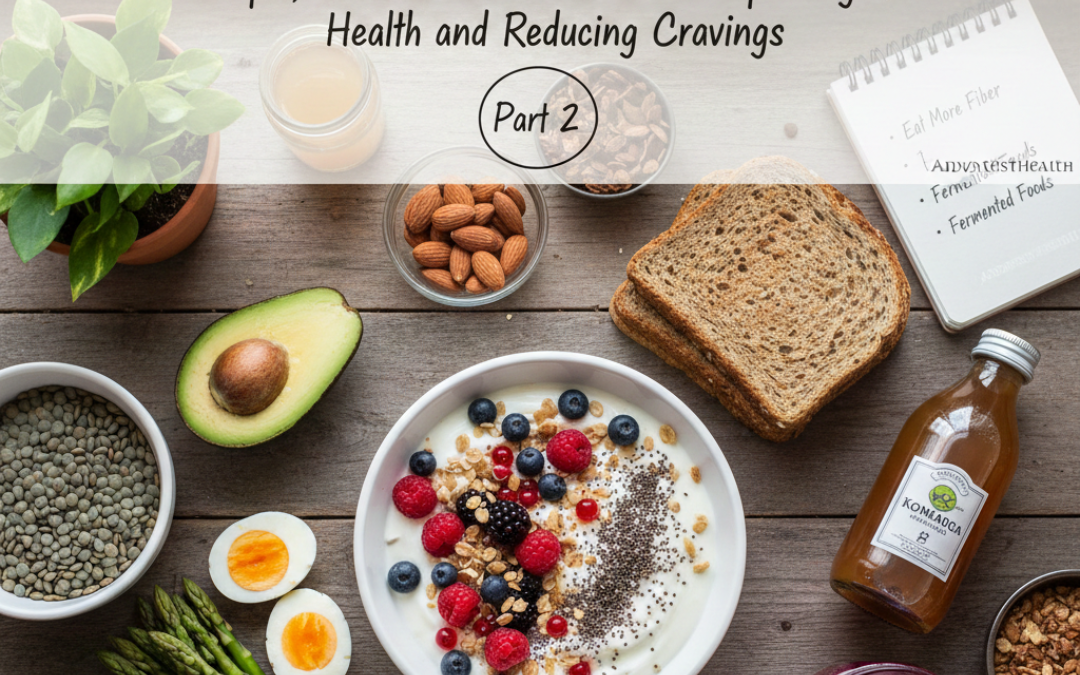
This article includes information generated with the assistance of ChatGPT (OpenAI, 2025). The content was reviewed and edited for accuracy by the author, Michelle Jenck, M.Ed. Health & Kinesiology and peer-reviewed by Lewis Martin, Registered Dietician.
Now that you know how the gut affects cravings, here’s the encouraging part: you can retrain your microbiome—starting with small, daily habits.
Most people begin noticing improvements in 2–6 weeks.
- Eat More Fiber (Especially Prebiotic Fiber)
Fiber is the main fuel source for good gut bacteria. When we digest fiber, we create compounds called short-chain fatty acids that help regulate appetite, reduce inflammation, and support mood (Koh et al., 2016).
Simple ways to add more fiber:
- oatmeal
- beans and lentils
- apples, bananas (slightly green), pears
- onions, garlic, leeks
- sweet potatoes
- nuts and seeds
Goal: 25–35 grams per day.
- Add Fermented Foods Daily (Start Small)
A Stanford study found that fermented foods increased gut diversity and lowered inflammation in just ten weeks (Wastyk et al., 2021).
Options include:
- plain yogurt or kefir
- kombucha (low sugar)
- kimchi or sauerkraut
- Miso
- tempeh
- Include Protein With Meals
Protein helps stabilize blood sugar and prevents “urgent” cravings for sweets or alcohol.
Aim for 20–30 grams per meal using:
- eggs
- poultry or fish
- beans, lentils, tofu, tempeh
- Greek yogurt
- nut-and-fruit snacks
Balanced blood sugar = fewer cravings.
- Reduce Added Sugar Gradually (Not Abruptly)
Cutting sugar slowly gives gut bacteria time to adjust. Try:
- choosing plain yogurt and adding berries
- cutting sweetened drinks with sparkling water
- setting alcohol-free nights
- swapping dessert for fruit most days
Small steps add up.
- Support the Gut–Brain Connection With Daily Habits
A healthy microbiome thrives when the nervous system feels safe.
Helpful habits include:
- Sleep: 7–9 hours
- Movement: walking, yoga, strength training
- Stress relief: nature time, breathing exercises, mindfulness
- Limit late-night screens (helps sugar/alcohol cravings)
Sample Daily Menu
| Breakfast | Greek yogurt + berries + chia seeds |
| Lunch | Grain bowl with veggies + greens + beans |
| Snack | Fruit + nuts or fermented veggies |
| Dinner | Lean protein + cooked vegetables + fermented food |
| Bonus | Walk 10–15 minutes after meals |
What to Expect:
Most people report:
- fewer sugar cravings
- decreased desire for wine or sweets at night
- steadier mood and energy
- less emotional eating
- better digestion and sleep
You don’t need perfection—just progress. Your microbiome adapts quickly when supported consistently. With each fiber-rich meal, fermented bite, better night’s sleep, and mindful reduction of sugar and alcohol, you’re training your cravings—not fighting them.
Key References:
- Koh, A., De Vadder, F., Kovatcheva-Datchary, P., & Bäckhed, F. (2016). From dietary fiber to host physiology: Short-chain fatty acids as key bacterial metabolites. Cell, 165(6), 1332–1345.
- Wastyk, H. C., et al. (2021). Gut-microbiota-targeted diets modulate human immune status. Cell, 184(16), 4137–4153.